EGRESS & ADB ExoMars Mission
The ExoMars Rosalind Franklin project aims at delivering the European Rosalind Franklin rover to Mars. The flight model of the rover (including a drill system, a science laboratory and European/US payloads) and of the carrier modules are already available and under maintenance at TAS-I.
Astronika contributes to the mission, providing two critical subsystems – Egress Subsystem aiming at successful deploying the Rover on the Mars surface and Antenna Deployable Boom that is to deploy and support helical UHF antenna.
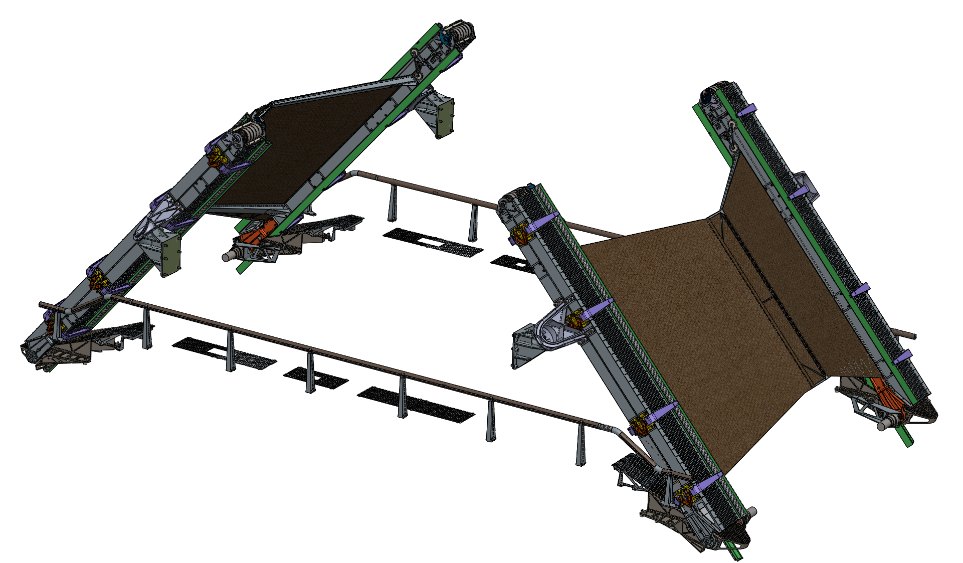
The EGRESS subsystem is a critical mechanical assembly of the Rosalind Franklin Mars mission, enabling the safe and reliable deployment of the rover from the lander platform to the Martian surface.
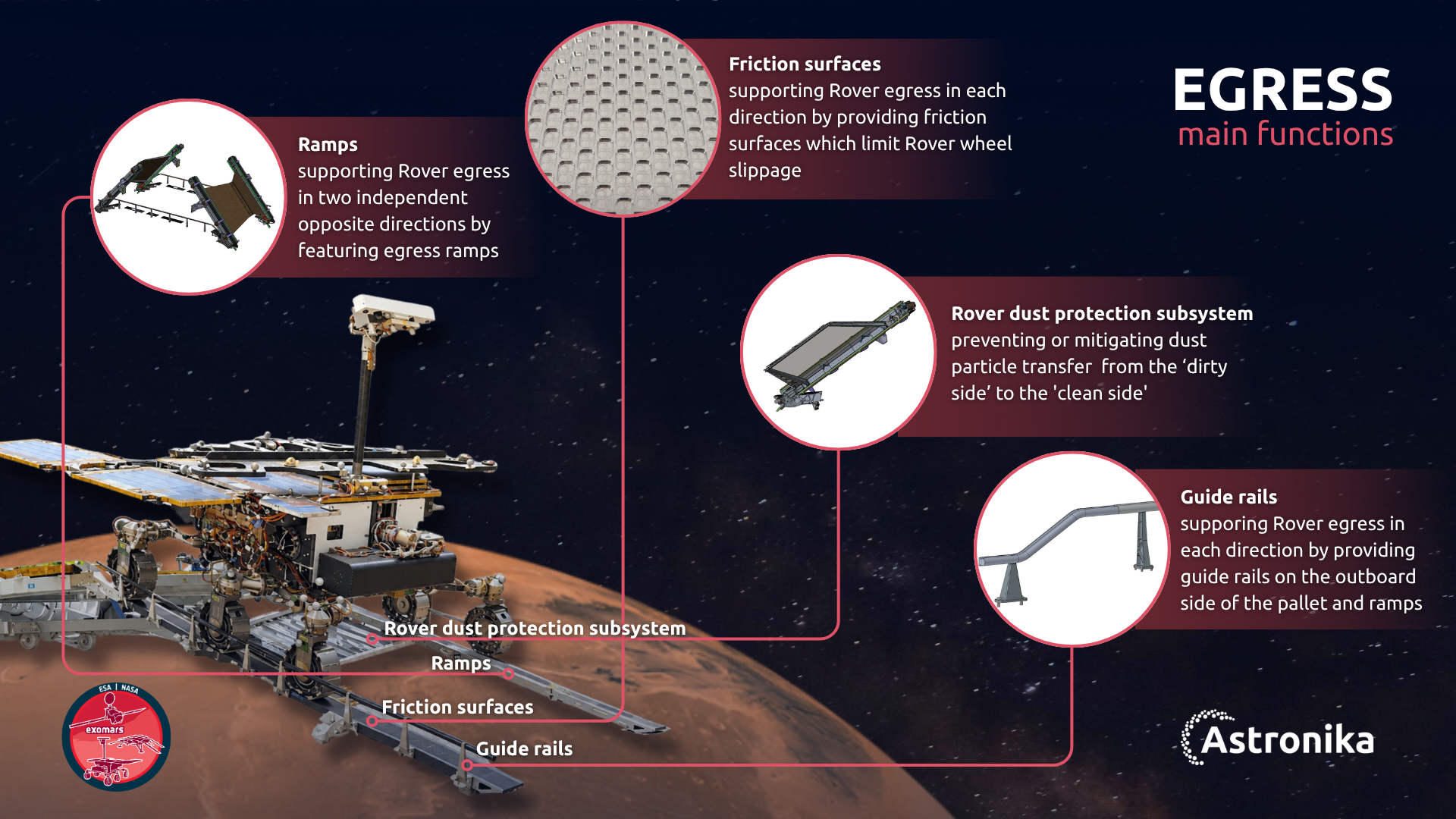
The EGRESS subsystem consists of four Ramp & Rail Assemblies (RRAs) and associated static and transition elements. Each RRA is a deployable mechanism that includes:
- Primary and Secondary Hinges with clock springs
- Guide Rails (static, transition, and dynamic)
- Friction Grids for traction
- Hold-Down and Release Mechanism (HDRM) using Frangibolt actuators
- Sensors (microswitches and potentiometers)
- Dust Protection Panels (RVDP)
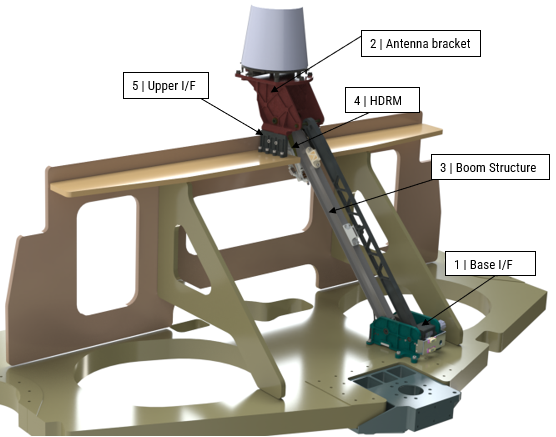
The ADB (Antenna Deployable Boom) is a mechanical subsystem which primary role is to securely stow, release, and deploy the helical antenna post-landing on Mars, ensuring proper orientation and structural support throughout the mission.
The ADB consists of the following key components:
- Base Interface (Base I/F): Houses the deployment mechanism and interfaces with the spacecraft.
- Boom Structure: A lightweight I-beam aluminium profile that supports the antenna.
- Antenna Bracket: Ensures vertical alignment of the antenna during and after deployment.
- Hold-Down and Release Mechanism (HDRM): Uses a thermal knife actuator and torsion springs to release the boom.
- Upper Interface (Upper I/F): Connects the HDRM to the spacecraft.
- Synchronization Link: Ensures the antenna bracket remains level during deployment.